Mold remediation in Oakland, CA
Mold remediation in Oakland, CA usually starts with a leak nobody found for a week. This page is the cleanup work. Testing a sample is a different trade, and it is not sold here.
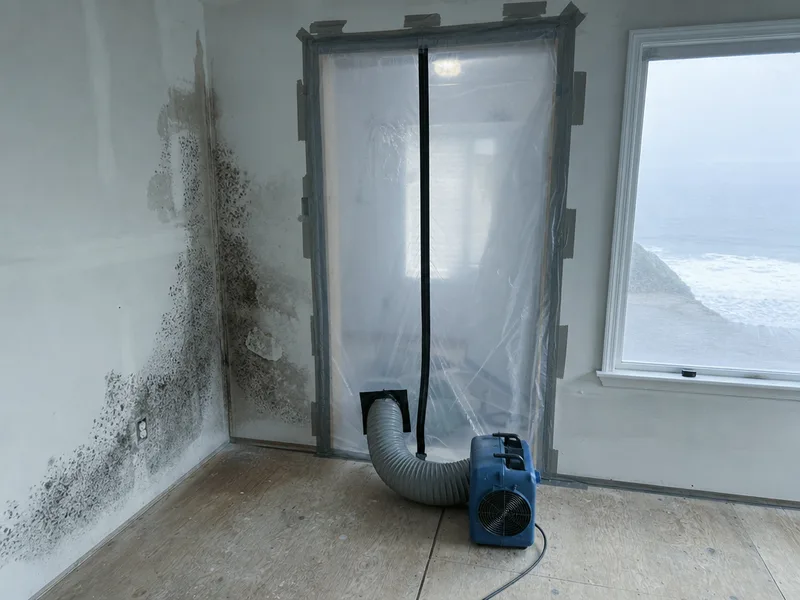
Mold remediation in an Oakland house
Most mold jobs in this city are not mysteries. A supply line let go behind a kitchen cabinet, a shower pan cracked, a gutter dumped against a wall through a wet January, and the growth arrived a week or two later somewhere nobody was looking. By the time somebody searches for this, the question has usually stopped being "is that mold" and become "how much of this wall is coming out".
The work has an order to it. Find the water and stop it, because growth cleaned off a surface that is still being fed comes back. Contain the room so the mess does not travel. Take out the material that cannot be cleaned. Dry what is left until it is properly dry rather than dry to the touch. Then rebuild. Skipping the drying step is the most common way a job gets done twice.
Mold removal and mold remediation are the same job
People search for both, and in Oakland "mold removal" is the phrasing more of them use. There is no useful difference in the work. Removal sounds like something that finishes when the visible patch is gone, which is the reading that gets houses into trouble, because the patch on the drywall is a symptom of the moisture behind it. Remediation is the same job named after the cause. Either word lands you here, and either way the contractor is looking at the cavity rather than the paint.
Is mold dangerous?
It depends on the person and the amount, and the honest answer has more shrugging in it than most sites admit. CDC's own summary is that exposure to damp and moldy environments may cause a variety of health effects, or none at all. Where it does cause problems the common ones are a stuffy nose, a sore throat, coughing, burning eyes or a rash, and people with asthma or a mold allergy can react badly. CDC also points at the 2004 Institute of Medicine review, which found enough evidence to link indoor mold exposure to upper respiratory symptoms in otherwise healthy people.
What none of that gives you is a threshold. There is no exposure number you can test a room against and call it safe, so the practical rule the federal agencies land on is the blunt one: if you can see it or smell it, get rid of it and fix the moisture.
Where mold turns up in Oakland houses
Two patterns account for most of it here. The first is the hills. Houses built into a slope in Montclair, Redwood Heights or above the Dimond have crawl spaces and lower rooms cut into the grade, and water moving downhill through a wet winter finds the uphill wall. Growth in those houses starts low and out of sight, and gets found by smell months before it gets found by eye.
The second is the flats. The older housing around Temescal, Fruitvale and the streets off Lake Merritt is mostly wood framed with lath and plaster, and small bathrooms that were not built with extraction in mind. A bathroom without a working fan runs at high humidity for hours a day, and EPA's guidance is to keep indoor humidity below 60 percent, ideally between 30 and 50. A room sitting above that most evenings does not need a leak to grow something.
Both patterns get worse in the same season. This region takes its rain in a handful of large winter systems rather than spread evenly through the year, so a roof or a gutter that seemed fine in October gets tested hard in January.
When the mold is somebody else's decision too
If you own the house, the mold is your call. If you rent, or the unit sits inside a homeowners association, other people have standing. California's Health and Safety Code section 17920.3 lists visible mold growth, as determined by a health officer or a code enforcement officer, among the conditions that make a building substandard, alongside dampness of habitable rooms. It excludes minor growth on surfaces that get wet as part of their normal use, which is the shower grout carve-out.
That matters practically more than legally. It means an inspector has something written to point at, it means a landlord or an association usually cannot treat visible growth as decor, and it means the argument about who pays often starts before the one about who cleans. No legal advice is given here and there is no lawyer behind this site. What it can tell you is which document people end up quoting.
What sends a mold job somewhere else on this site
Three cases belong on other pages. If the water came from a sewage backup, the mold is the second problem and the contaminated water is the first, and EPA says to call somebody with experience of that specific thing. If the growth is overhead and the source is above it, start at ceiling water damage repair, because a ceiling cavity is where drying gets skipped most often. And if the leak is still running, or nobody has found it yet, the first job is water damage restoration and locating it.
What the publishers actually say about mold
Every figure below was read on the publisher's own page on the date in the last column. None of it is our own measurement, and none of it is a quote for your house.
| Source | What it says | Read |
|---|---|---|
| US EPA, Mold Cleanup in Your Home | If the moldy area is less than about 10 square feet, roughly a 3 ft by 3 ft patch, in most cases you can handle the job yourself. | 2026-08-31 |
| US EPA, Mold Cleanup in Your Home | Absorbent or porous materials, such as ceiling tiles and carpet, may have to be thrown away if they become moldy. | 2026-08-31 |
| US CDC, About Mold | Clean up and dry out your home fully and quickly, within 24 to 48 hours, after a flood. | 2026-08-31 |
| US EPA, A Brief Guide to Mold, Moisture and Your Home | Keep indoor humidity below 60 percent, and ideally between 30 and 50 percent. | 2026-08-31 |
| California Health and Safety Code section 17920.3 | Visible mold growth, as determined by a health officer or a code enforcement officer, is listed among the conditions that make a building substandard. | 2026-08-31 |
Questions people ask before they call about mold
-
How much does mold remediation cost?
Nobody in this market publishes an Oakland price, and this site will not invent one. What a mold job costs tracks three things: how much material has to come out, whether the cavity behind it is still wet, and what the water was before it became a mold problem. A bathroom wall that has been damp two weeks is a different job from a crawl space ceiling that has been wet since the last storm season. The pricing page sets out the ranges in public figures rather than in a number invented here.
-
What's the difference between remediation and restoration?
Remediation is getting rid of the growth and the conditions that let it start. Restoration is putting the house back afterwards: new drywall, new insulation, paint. Most jobs need some of both, and the order matters, because EPA is explicit that paint applied over a moldy surface is likely to peel. Dry first, clean second, rebuild third.
-
Do I need a mold test before the work starts?
Sometimes, and it is not a decision this site can make for you. Testing and inspection are a separate trade with separate people in it, and nothing on this page is a claim that either is sold here. If you already know where the water came from and you can see the growth, a test tells you little that looking does not. If you cannot find the source, the source is the thing to chase, and that starts at water damage restoration rather than at a laboratory.
-
Can I clean up mold myself?
EPA draws the line at about ten square feet, roughly a three foot by three foot patch, and says that under it most people can handle the job themselves. Two things move you off that line whatever the size. One is porous material: EPA notes that carpet and ceiling tile often have to be thrown out, because growth fills the spaces inside them. The other is what the water was. If it came from a sewage backup, EPA says to call somebody with experience of contaminated water, whatever the square footage.
-
How long does it take for mold to grow after water damage?
Both federal agencies give the same window and neither gives a guarantee. CDC says to clean up and dry out fully within 24 to 48 hours after a flood, and EPA says that if wet materials are dried inside that window, in most cases mold will not grow. Past it you are no longer preventing anything. You are dealing with what already started.
-
Who do you call for mold remediation in Oakland?
Send the details here and the request goes to a restoration contractor who works in Oakland. This site matches requests to one local operator and is not the company that does the work, which is worth knowing before you send anything. Before agreeing to work with whoever turns up, the Contractors State License Board runs a free License Check tool that says whether a license number is current and who holds it. That check is yours to run, and it takes two minutes.
Tell us what the growth looks like
A short description and a photo are enough to start. The request is written down and passed to a restoration contractor working in Oakland.