Sewage cleanup in Oakland, CA
A sewage backup in an Oakland home is category 3 water, and that changes what can be dried and what has to be thrown out. This page is the cleanup after it has already reached the house.
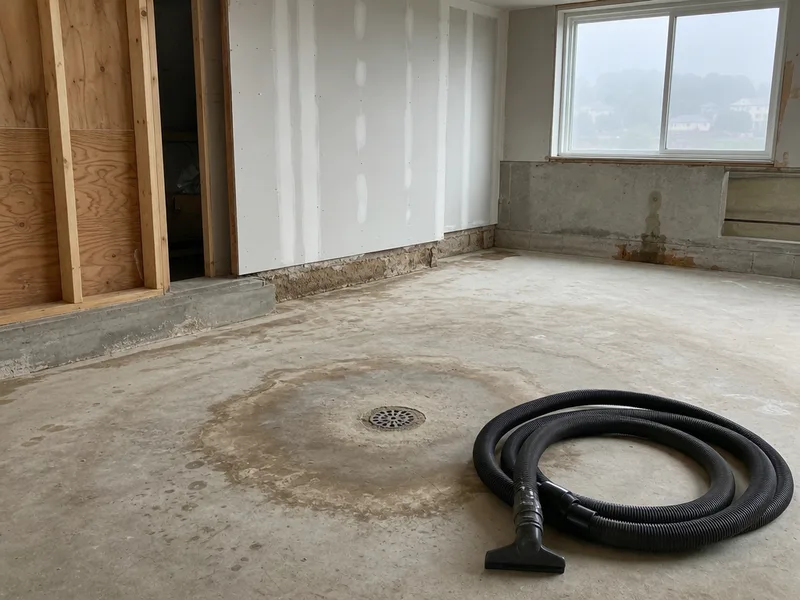
Sewage cleanup in an Oakland home
A sewage backup announces itself. Water rising in a shower tray while a toilet is flushed, a floor drain in a laundry room running the wrong way, a smell in a downstairs room that was not there in the morning. Unlike a slow leak, there is no period where anybody wonders whether it is happening.
What follows is a different job from a burst supply line, and the difference is the water rather than the volume. Clean water from a pipe is mostly a drying problem. Sewage is a decontamination problem first and a drying problem second, so the sequence changes: stop the flow, get people and pets out of the affected rooms, contain them, remove what soaked it up, clean and disinfect what stays, then dry the structure and deal with the odor. The last step is the one people underestimate, because a room can look finished and still smell for months if the cavity behind the skirting never dried.
Category 3 water is not a grading of how bad it looks
Water in this trade gets sorted by what is in it rather than how much of it there is. Sewage sits at the contaminated end, and the label carries consequences: porous material comes out instead of drying, the work needs containment, and the people doing it need protective equipment. A tablespoon of it in a bathroom is still category 3 water. Half a meter of clean water from a supply line is not.
This is the point EPA makes from the mold side and it is worth reading literally: where damage was caused by sewage or other contaminated water, call somebody with experience of contaminated water. No square footage threshold appears in that sentence, and EPA applies one to ordinary mold in the same breath. The exception is deliberate.
Where an Oakland sewage backup usually starts
The City is straightforward about the split. Oakland Public Works maintains the mains, over 934 miles of them, running from six inches to more than 66 inches across, and it names the usual culprits inside them: debris, fats and grease, and tree roots. The property owner is responsible for the private sewer lateral that connects the house to that system, and Oakland says that explicitly includes the lower lateral, the section that runs under the street to the main.
That last detail catches people out, because it is not the arrangement everywhere. In a lot of American cities the municipality owns the pipe from the property line outwards. Here it does not, and a mature street tree over a hundred-year-old clay lateral is a very common Oakland failure. Rockridge, Temescal and the older streets in the Dimond and Glenview have both the trees and the clay.
Once you know that, the shape of the problem is easier to read. A backup affecting one fixture is usually a blockage on the house side. A backup affecting the lowest fixtures in the building at once, often a downstairs toilet or a basement floor drain, points further down the line, and the further down it is, the more likely it is still yours.
The certificate is a separate matter, and it is not something we do
If your lateral turns out to be the cause, you will meet the East Bay's compliance regime. EBMUD issues a Compliance Certificate when a lateral is shown to be leak-free, and it is required on specific triggering events rather than on a schedule. This site does not inspect laterals, does not replace them and does not issue certificates. It explains the rule, because a backup is often the day somebody discovers it exists.
The whole of that is on the Oakland sewer lateral rules page, including which events trigger a certificate and what the extension route is when a sale is already in escrow.
After the cleanup
Two things follow most sewage jobs. The first is drying, properly, in the wall cavity and under the floor rather than on the surface, which is the same structural drying work described on the water damage restoration page. The second is watching for growth, because a cavity that stayed wet after a contaminated water event is the worst version of a mold job. Mold remediation is the page for that, and it is a much shorter conversation if the drying was done properly the first time.
What the City and EPA publish about sewers and contaminated water
Each row was read on the publisher's own page on the date shown. These are the facts a homeowner can check, and none of them is a quote for your house.
| Source | What it says | Read |
|---|---|---|
| City of Oakland, Sewer Maintenance | Oakland property owners are responsible for the private sewer laterals that connect their homes to the sewer system, including the lower lateral. | 2026-08-31 |
| City of Oakland, Sewer Maintenance | The Sewer Services Division performs preventive maintenance on over 934 miles of sewer main, ranging from six inches to over 66 inches in diameter. | 2026-08-31 |
| City of Oakland, Sewer Maintenance | Blockages are caused by debris, by fats, oils and grease, and by tree roots that gather in sewer pipes. | 2026-08-31 |
| US EPA, Mold Cleanup in Your Home | If the damage was caused by sewage or other contaminated water, call in a professional who has experience cleaning and fixing buildings damaged by contaminated water. | 2026-08-31 |
| EBMUD, Private sewer laterals | A Compliance Certificate is issued when a private sewer lateral is shown to be leak-free. | 2026-08-31 |
Questions people ask after a backup
-
Do plumbers clean up water flooding?
A plumber clears the blockage and fixes the pipe. That is the first call, and on a live backup it is usually the more urgent one. What a plumber generally does not do is the part afterwards: pulling out the contaminated material, cleaning what stays, drying the structure and dealing with the smell. Those are two different trades and most houses need both. If the pipe is still blocked, call a plumber first and send this afterwards.
-
What is category 3 water damage?
It is the industry shorthand for water that is grossly contaminated, and sewage is the textbook case of it. The practical consequence is not the label. It is that porous material which soaked it up is generally removed rather than dried, and that the people doing the work need protective equipment and containment. EPA says plainly that damage caused by sewage or other contaminated water needs somebody with experience of contaminated water, and it says that regardless of how small the area is.
-
Is black water damage the same thing?
Same water, older name. "Black water" is what a lot of homeowners and insurers still call it, and it means the same category: sewage, a backed-up drain carrying waste, or flood water that has run through the street. It is worth using whichever phrase your insurer uses on the paperwork, because the wording on a claim tends to follow the adjuster's vocabulary rather than the contractor's. How a California water claim is framed goes through that in more detail.
-
What has to be thrown out after a sewage backup?
Expect to lose carpet and its padding, any pad or soft furnishing that took the water, insulation, and the lower section of drywall where it wicked up. Sealed hard surfaces, tile, concrete and framing usually stay and get cleaned. The dividing line is porosity: EPA makes the same point about mold on carpet and ceiling tile, that growth fills the spaces inside porous material and cannot reliably be got back out. Anything you want kept for the insurer should be photographed before it goes in the dumpster.
-
Will mold follow a sewage backup?
If the structure stays wet, yes, and quickly. CDC's window for drying a flooded house is 24 to 48 hours, and a backup that soaked into a wall cavity is a wet cavity whatever the floor looks like. That is why the drying half of the job matters as much as the removal half, and why mold remediation is the page a lot of these jobs end up on two weeks later, when only the visible mess got dealt with.
-
How much does it cost to clean up sewage?
It is driven by area and by how much has to be removed rather than dried, which is why a sewage job of the same square footage costs more than a clean water one. Nobody publishes an Oakland figure for it, so this site does not have a number to give you and will not invent one. What can be said is what moves it: how many rooms the water reached, whether it got under cabinets or into a wall cavity, whether the lateral itself needs work afterwards, and whether the claim goes to insurance. The pricing page collects the published ranges that do exist.
Tell us what came up and how far it went
One line about the fixture and the rooms it reached is enough to start with. It goes to a restoration contractor who works in Oakland, and nothing is committed by sending it.