Soot removal, and why the first wipe decides the outcome
Soot behaves nothing like dust. It is oily, it is acidic, and the instinct to reach for a wet cloth is the single most expensive move in the room.
Published
Soot is not dirt, and treating it as dirt is the mistake
Dust sits on a surface. Soot does not. What a fire leaves behind is an aerosol of unburned carbon and condensed combustion products, and it arrives hot, so it lands on cool surfaces and partly bonds to them. It is oily. It is usually acidic. And it is fine enough to be pushed into the pores of paint, grout and unsealed timber by anything that applies pressure.
That combination explains almost every bad outcome in a soot-damaged room. A wet cloth adds the one thing needed to carry the residue deeper. Pressure does the rest. What was a surface deposit that lifts off becomes a stain in the coating that does not.
So the working rule is the opposite of normal cleaning instinct: dry first, gently, in one direction, and stop as soon as the tool is loaded.
Work out what burned before you touch anything
Soot is not one substance and the residues behave differently enough that the right method changes.
Dry, fast-burning fires in paper, timber and most furnishings leave a dry powdery deposit. It is the most forgiving type and it responds well to dry sponging and vacuuming.
Smouldering, oxygen-starved fires leave a sticky, dense, smeary residue that spreads under pressure. Anything wiped tends to streak.
Protein fires, the kitchen classic where food burns onto a hob, leave almost no visible deposit and an extremely persistent varnish-like film over every surface in the building, along with a smell that outlasts the mark. It is the type most often underestimated, because the walls look fine.
Synthetic and plastic combustion leaves the most aggressive residue chemically, because the by-products can be corrosive to metal fixtures and electronics as well as staining.
You do not need to diagnose it perfectly, but knowing which of those four you are looking at decides whether dry sponging is likely to work or whether the room needs chemistry.
Protect yourself before you clean
The particulate that makes soot difficult to clean is also the part that is worth not inhaling. The CDC's guidance for smoke and ash recommends NIOSH Approved respirators, which filter smoke or ash before it can be breathed in, and it notes plainly that these do not come in sizes suitable for very young children. The same guidance suggests running a portable air cleaner to keep the air in a room cleaner while there is smoke indoors.
Practically: a fitted respirator rather than a surgical mask, gloves, long sleeves, and ventilation if the outside air is clear. Disturbing settled soot puts it back into the air, so the room gets worse before it gets better and the person doing the work is standing in it.
The dry pass, in order
- Vacuum without contact. A vacuum with a HEPA filter, nozzle held slightly off the surface, no brush head. Brushing grinds the deposit in. This takes off the loose fraction, which is often most of it on a dry-burn residue.
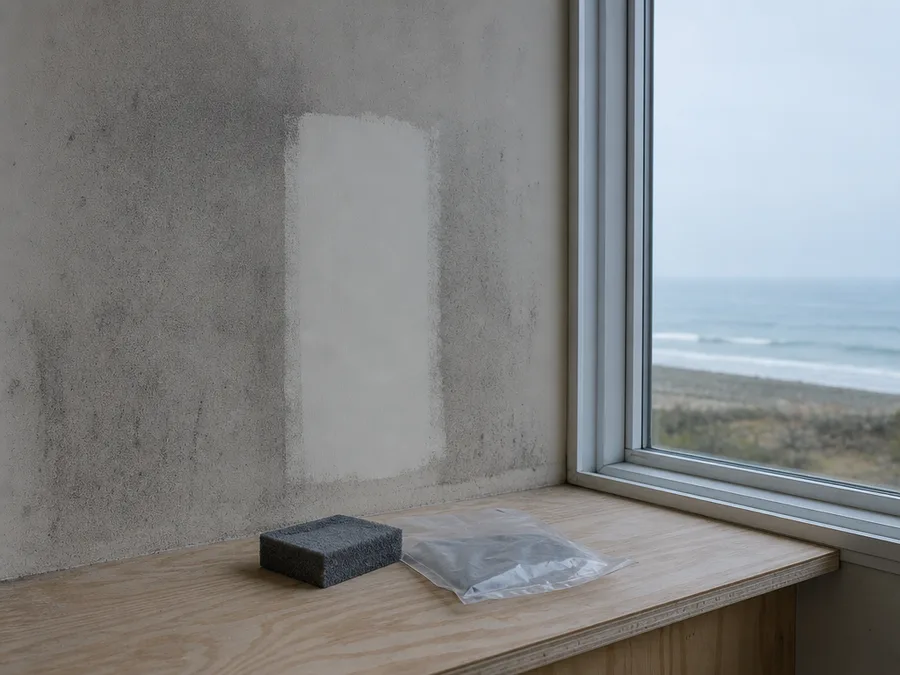
- Dry chemical sponge, dry. Straight strokes, one direction, no overlap on the return. Turn or cut the face the moment it greys up. A loaded sponge stops lifting and starts smearing, and the line where that happened is visible afterwards.
- Work top to bottom. Soot falls. Cleaning a wall above an already-cleaned surface undoes the surface below it.
- Only then consider anything wet. If a wet stage is used at all it comes after the dry pass has removed everything it can, and it is a controlled cleaning solution rather than water.
What does not come clean, and why that is a decision rather than a failure
Some material will not release the residue at any effort, and the reason is the same one the EPA gives about porous material in a different context: contamination gets into the spaces and crevices inside the material, where nothing applied to the surface can reach it. Once that has happened, cleaning is removing the top layer of a problem that continues underneath.
In a soot-damaged building that generally means unsealed timber, insulation, textiles that held the residue, and heavily absorbent finishes. Replacing them is not a contractor upselling. It is the only option that ends the smell, because a residue you cannot reach is a source that keeps releasing.
That is also why odour and soot are one job rather than two. The mark on the wall and the smell in the room usually come from the same deposit, and cleaning only what is visible leaves the source in place. What fire restoration actually covers, including the sequence of cleaning, sealing and replacement, is set out on our page for fire and smoke damage restoration.
The part most guides leave out: fires end wet
A house that has had a fire put out in it has also had a great deal of water introduced, often into ceilings and wall cavities that are now full of soot as well. That combination is worse than either alone: the water carries the residue into material that would have stayed clean, and the wet material is on the same drying clock as any other water loss.
The practical consequence is that soot work and drying work compete for the same first day, and doing them in the wrong order wastes both. Wet material that is left while the walls are cleaned is losing time against a clock the EPA puts at 24 to 48 hours, which our guide to the first two days after water damage goes through in detail. Cleaning soot off a surface that is about to be removed for water reasons is effort spent twice.
The federal starting point for a householder after a home fire is the US Fire Administration's After a Fire guidance, which covers the practical order of checking a property and beginning cleanup before any of the above becomes relevant.
What this site does
We arrange the work rather than carrying it out. The details you send reach a restoration company operating in the East Bay, on the same basis described on the main restoration page. We do not employ the people who turn up, so we describe the method rather than the credentials of anyone doing it, and we do not publish a time by which somebody will arrive.
For a soot job, the useful details are the address, which rooms are affected, what burned, and whether the fire was put out with water. That last answer changes the order of the work more than the size of the affected area does.
Sources for this page
Read on the publisher own site on the date shown. Nothing here is summarised from memory.
| Publisher | What it says | Read |
|---|---|---|
| US EPA, Mold Cleanup in Your Home | Absorbent or porous materials may have to be thrown away, because contamination can grow into the spaces and crevices of porous material where it cannot be reached from the surface. | 2026-08-31 |
| US CDC, wildfire safety | Recommends NIOSH Approved respirators, which filter smoke or ash before it can be breathed in, and notes that these do not come in sizes suitable for very young children. | 2026-08-31 |
| US CDC, wildfire safety | Recommends setting up a portable air cleaner or filter to keep the air in a room cleaner when it is smoky indoors. | 2026-08-31 |
| US Fire Administration, After a Fire | Publishes the federal guidance for householders on checking a home and beginning cleanup after a home fire. | 2026-08-31 |
What people ask about soot
-
Does vinegar dissolve soot?
Not really. Vinegar is a dilute acid and soot residue from a building fire is already acidic, so it does very little to the deposit itself while adding moisture that helps it bind to the surface. It has a reputation for odour work rather than for soot, and even there it is competing with methods that actually address the source. -
Does WD-40 remove soot?
It can lift a smear on a hard non-porous surface, because soot is oily and WD-40 is a solvent. What it also does is leave its own oily film, which then attracts and holds the next round of deposit and interferes with any coating or paint applied later. On a painted wall it usually trades a grey mark for a shiny one. -
What is the best thing to remove soot?
A dry chemical sponge, used dry, with no water and no pressure. It is a vulcanised rubber block that lifts the deposit off the surface rather than pushing it in. The first pass is always dry, always in one direction, and the sponge face is cut or turned as soon as it loads up. Wet cleaning, if it happens at all, comes after the dry pass has taken off everything it can. -
How much does it cost to remove soot?
It depends far more on what burned than on how much surface is affected. A dry protein fire from a kitchen leaves a thin varnish that covers everything and is genuinely difficult; a fast-burning fire in synthetic material leaves a dry powdery deposit that comes off more easily. Cost also turns on how much has to be removed rather than cleaned, since porous material that absorbed the residue is usually replaced.
Send the details of the fire damage
Address, which rooms, and what burned. It reaches a restoration company working in the East Bay.